Strong Businesses Grow When Better Decisions Become Everyday Habits
Business success is often associated with major milestones—a new market, a larger workforce, or increased revenue. Yet the organisations that continue performing well over many years usually attribute their progress to something less dramatic: consistent decision-making supported by practical systems and capable leadership.
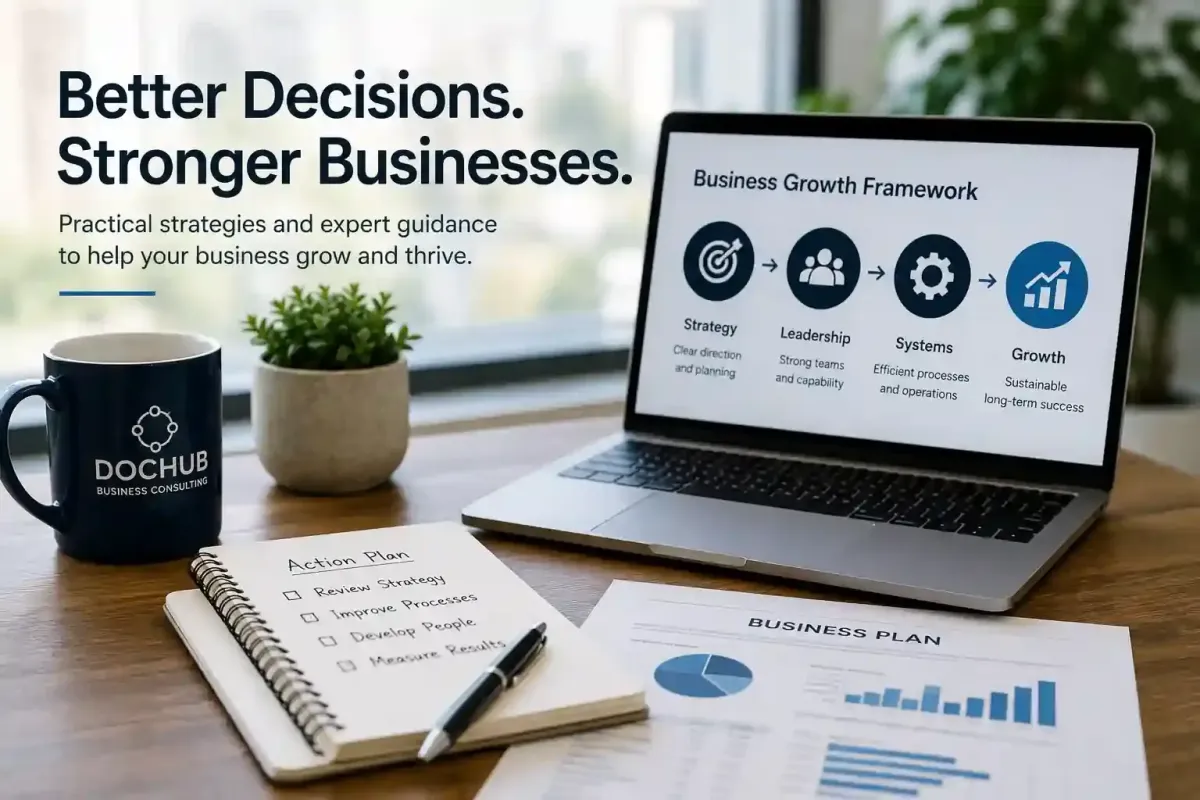
Every business reaches moments where intuition alone is no longer enough. Growth introduces new responsibilities, operational complexity, and greater accountability. At that stage, structured planning becomes essential, helping organisations move beyond reacting to challenges and toward building processes that support long-term performance.
For businesses seeking to strengthen leadership capability, operational systems, or strategic planning, resources available through the Business Consulting section of https://dochub.com.au/services/ reflect the kinds of practical frameworks organisations commonly adopt as they mature and prepare for sustainable development.
Better Decisions Depend on Better Systems
As businesses expand, the number of decisions made each day increases significantly. Recruitment, budgeting, customer service, compliance, technology adoption, and performance management all compete for attention. Without clear processes, decision-making can become inconsistent, leading to duplicated effort, communication gaps, and unnecessary risk.
Documented systems create stability by providing shared expectations across an organisation. Instead of relying solely on individual experience, businesses establish procedures that help teams approach recurring situations consistently. This improves efficiency while making it easier to onboard new employees and maintain service quality as operations grow.
Leadership also benefits from structured systems. Managers spend less time resolving avoidable operational issues and more time focusing on strategic priorities that support future growth. In this way, well-designed processes become an important foundation for resilience rather than simply administrative requirements.
Developing Skills That Strengthen Organisations
Business performance is shaped not only by systems but also by the people responsible for applying them. Even the most carefully designed processes rely on employees who can communicate clearly, collaborate effectively, and understand their responsibilities.
For this reason, employment and skills development remains an important part of organisational improvement. Businesses regularly invest in leadership training, professional education, technical capability, and communication skills that enable staff to contribute more confidently within increasingly diverse workplaces.
Some professionals also choose external learning opportunities to strengthen workplace communication. Educational providers offering professional English coaching services demonstrate how individuals continue building practical skills that support clearer discussions, stronger documentation, and greater confidence in professional environments. Although separate from business consulting, this reflects the broader employment and skills perspective that continuous learning strengthens organisational capability over time.
The cumulative effect of these investments is often greater than any individual training program. Employees become more adaptable, managers communicate expectations more effectively, and organisations are better equipped to respond to changing business conditions.
Sustainable Performance Comes From Continuous Improvement
There is rarely a single moment when a business becomes resilient. More often, resilience develops through a series of deliberate improvements made consistently over time.
Regular reviews of operational processes, leadership practices, workforce capability, and organisational goals help businesses identify opportunities before they become significant challenges. Continuous improvement encourages organisations to refine existing systems rather than waiting until problems demand urgent attention.
This mindset also supports long-term stability. Businesses that routinely evaluate how they operate are generally better prepared for market changes, workforce growth, technological advances, and evolving customer expectations.
Ultimately, sustainable growth is not created by isolated successes or short-term momentum. It emerges when organisations combine thoughtful planning, capable leadership, practical systems, and ongoing skill development into everyday operations. Over time, these steady improvements create stronger businesses that remain adaptable, accountable, and well positioned for future opportunities.